Looking for something?


Archive for the ‘Digital Out-of-Home’ Category

If I allow myself to stand back from the daily business of closing clients, keeping applications current and humming 24/7 and scaling the business, I can see the DOOH market in an entirely different light.

Much of our market has been influenced by the whims of advertising agencies seeing or discovering DOOH as either an exciting new opportunity to engage mobile consumers in and around places, or as an extension of their other media - TV, OOH or Digital. Many campaigns run for a matter of weeks, and in my experience, most (national) campaigns run on around 1,000 venues, regardless of if you can offer 10,000, 100,000 or even 1,000,000 screens. At the end of the campaign, the sales process starts over. Ideally we have repeat customers that are more efficient/economic to close, but a majority are new accounts, reflecting the fact that the industry is still at an experimental stage (clients like to “first” or “different” but as someone one said, “you can only be a virgin once”).

But that’s not the whole story - there are other segments of our industry that are not ad-driven and are therefore potentially at least, able to be more strategic and longer serving/surviving. These businesses are predominantly marketing oriented and therefore our products and services are capable of becoming mission critical tools for businesses.

A business with millions of fans on Facebook wants to see those fans move from their web or mobile screens towards the POS screen. Connecting Facebook, DOOH, email etc is not a one month campaign but hopefully 1-3 year strategy.

As Techcrunch reported here, Starbucks’ mobile app has generated $110 million in card cash transfers, a tiny drop in the ocean for them (even their gift card transactions are worth $2.4 billion!). But it’s a meaningful drop - and as a strategy, it’s here for the long haul, not a four week run. Certainly any DOOH business would be delighted to be part of that opportunity.

So be honest, is your DOOH business model tactical or strategic? Are you enabling advertising or marketing?

Share

Last week Jason Kates wrote An Open Letter to the Digital Out-Of-Home Industry.

Jason has his detractors, but he’s been in the industry longer than most of us and has deep experience (and war wounds) of all the problems we still stubbornly have in our industry. He’s been a platform guy, a signage guy, a network guy and most recently, an ad platform guy. He’s smart, and understands the influence of the web on media. Something not enough people in DOOH do. He might not be completely right about Social TV, but I suspect he’s not completely wrong. So I prefer to look at what he might be right about.

Many people misunderstand what interactivity in DOOH means. Outside of touch screens, it is rarely about literally interacting in front of a screen. Of course a screen can trigger interaction, but that is by far the less common case for engagement. And if that literal version of interactivity is what people think about when they dismiss social engagement, they are barking up the wrong tree.

Most DOOH doesn’t have the dwell time or spot length for engagement. There are exceptions (bars and sports stadiums) but they are unlikely to be business cases for the next Google.

Interactivity to me at least (and to the growing number of people not focused on DOOH, but on screens that engage regardless of acronym) means that there’s some pulse somewhere on a network. When someone interacts, that interaction, be it a fan, a follow, a tweet, a text, a photo, a game play, a song play etc, can be reflected on multiple screens to help those screens be more interesting. A passive screen might then display What’s Playing Here, Who’s Here Now, What’s On Offer, What’s Happening…

A screen that doesn’t do this is dead. Dead to audiences, dead to advertisers and dead to investors.

That’s why TV is trying to redefine itself. At least it’s trying! And that’s why DOOH needs to do the same.

If DOOH practitioners don’t understand the scope and potential of 360 degree interactivity, they will have a blind spot for how social and mobile actually impact DOOH.

Ken Goldberg gets it right here in my opinion.

We have to find better ways to make DOOH relevant.

Let’s not get (conveniently) distracted by the definition of Social TV - it already means different things to different people. I am confident that companies like Bluefin Labs could disrupt Neilson. I am also confident that Twitter and Facebook will be mainstays of DOOH content (when done right and not infringing patents!)

So, assuming we all have a healthy respect for an argument, I do not agree with our favorite Brit (well he has more followers than me) Adrian Cotterill, when he tweeted his response to Jason’s open letter that “SocialTV is kinda orthogonal to the whole DS/DOOH issue I have never ever read such RUBBISH…”

Like Mr Kates, I suspect Adrian is not completely right. There’s more to Social TV than 140 characters can say.

Share

The start of this year’s DSE was framed by talk of failure with the news about one of the show’s sponsors, Broadsign going into Chapter 11, Ecast shutting down a couple of days earlier, and several other rumored fire sales. But many of the people I met by the end of show, felt optimistic.

And so did I.

THE GOOD:

Bill Gerba’s workshop was full of really valuable advice, borne of years of experience, backed up by real data and examples. If anyone wants to get it right - please, please speak to Bill first!

Lesson: Some smart and persistent folks are here for the long haul. Stick close to them.

THE BAD:

I sat through one workshop presentation (by a lady I will not mention) that I can honestly say was THE WORST I have ever witnessed - THE WORST - She was supposed to be helping the audience understand interaction and engagement and clearly had little digital experience. As the audience took copious notes, I could only imagine that some if not all would waste time, money and possibly entire businesses if they naively did anything she recommended.

Lesson: Just because someone can spell DOOH, doesn’t mean they know what they’re talking about. Ask them more probing questions about their Digital experience.

On the floor I saw nothing new and nothing inspiring. DOOH for many is still technology driven rather than solution driven.

As a client of mine observed as we walked around the show “Same as last year. Nothing new. Where’s the innovation?

Lesson: Innovation and solutions are the life blood of vibrant industries - Let’s make sure we have a pulse.

THE UGLY:

Setting aside my agenda of getting everyone up to speed on mobile and social - There were no good examples of either technology in my opinion. Don’t get me wrong - this isn’t about being cool, if your network isn’t connected to important channels, it’s going to be irrelevant. But poor execution (e.g. QR codes that are too small, too fast or too far away to be scanned) is worse than being irrelevant as they perpetuate the notion that the technology doesn’t work.

Example: Twitter walls that were unreadable from more than 10 ft away with little understanding of how to grab attention. They don’t get any better with the add-on of gimmicky gestural technology - that simply doesn’t solve the problem of grabbing attention. Again, it’s just technology for technology’s sake.

Lesson: Great technology + Poor execution = Fail

GLASS HALF FULL

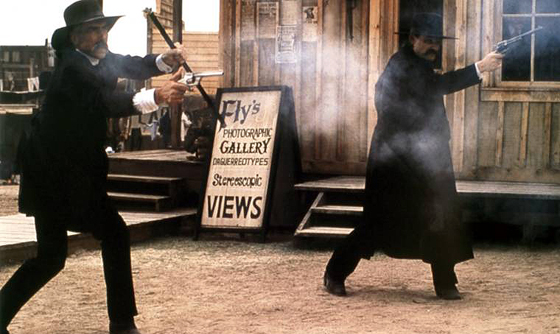
With the self professed curmudgeon, David Haynes, and the super smart David Weinfeld, I was delighted to take part in a different kind of panel. It should have been called the “Cut The Crap” panel or the No BS panel, but the sensible folks at DSE, tamed the title slightly and branded it an “Interactive Shootout”. Our mission was to debate the merits of interactive technologies in a deliberately polarizing way to show all sides of the issues - and we were under orders to NOT be diplomatic, to NOT pitch and to NOT play safe. Well of course the three of us are not known for playing safe…

Coming out of the Interactive Shootout, which was packed, I felt optimistic. The questions (not just at that session but in general) show a more enlightened community. And I think the people sticking around are now only too aware of the challenges as well as the opportunities.

Lesson: With more open/honest discussions and less hype or BS, we might actually learn how to grow as an industry.

Conclusion: Yes, we have our work cut out for ourselves with the “F” challenges of our industry: Friction, Fragmentation, and for the time being at least, its Fragilty - but it isn’t F!@#$ed.

Share

OK - this is NOTHING to do with LocaModa, or DOOH.

Can I claim it’s relevant to The Web Outside as it was filmed outside? Well, it’s a Friday, and I’m a proud dad. And there are some learnings around social media here….

Here is a video of my 15 year old daughter Scarlet, playing her own song “Back Where We Started”. It’s starting to get airplay in Romania - well that’s the power of Facebook and YouTube - it’s a small world after all.

Please spread the word. Because that’s what friends do :)

Share

I am a speaker in what’s been billed an “Interactive Shootout” at 9.00 am, Thursday March 8th at DSE.

Details here

The fight debate will take a deeper look at the realities of interactive technologies and will (if I’m anything to do with it) cut the crap to expose the good bad and ugly.

This will be a no pitch zone, warts ‘n all, crash course for the red hot area of how adding the words “mobile” “social” or “local” to DOOH, might or might not mean a damn.

To help expose the BS and provide an engaging and provocative learning experience, I will be joined by two of the brightest and non-BS people in our industry - David Haynes (Sixteen:Nine blog, pressDOOH and The Preset Group) and David Weinfeld (Digital Signage Insights blog and CSO at Screenreach).

David Weinfeld and I will take opposing sides of each question lobbed at us by Mr Haynes - we may not even know which side we’ll be asked to take until Mr Haynes directs us - that way, the audience will gain perspective into the pros and cons of otherwise hyped areas of our industry.

I’m confident that attendees will leave with a rounder sense of the challenges and opportunities - rather than a sales pitch. And if we can save anyone from getting at any of the war wounds that we have got in the past 10+ years of DOOH, then it’ll be time well spent.

Hope to see you there.

Share