Looking for something?


Posts Tagged ‘Facebook’

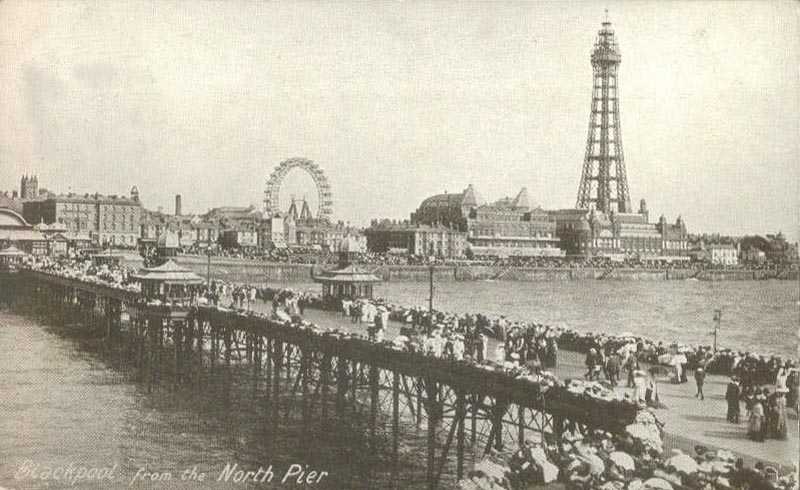
Although I’ve lived in Boston these past 10 years and now spend much of my time in Orlando at Monster Media HQ, I grew up in London and many things British tug at my heart and remind me of my roots.

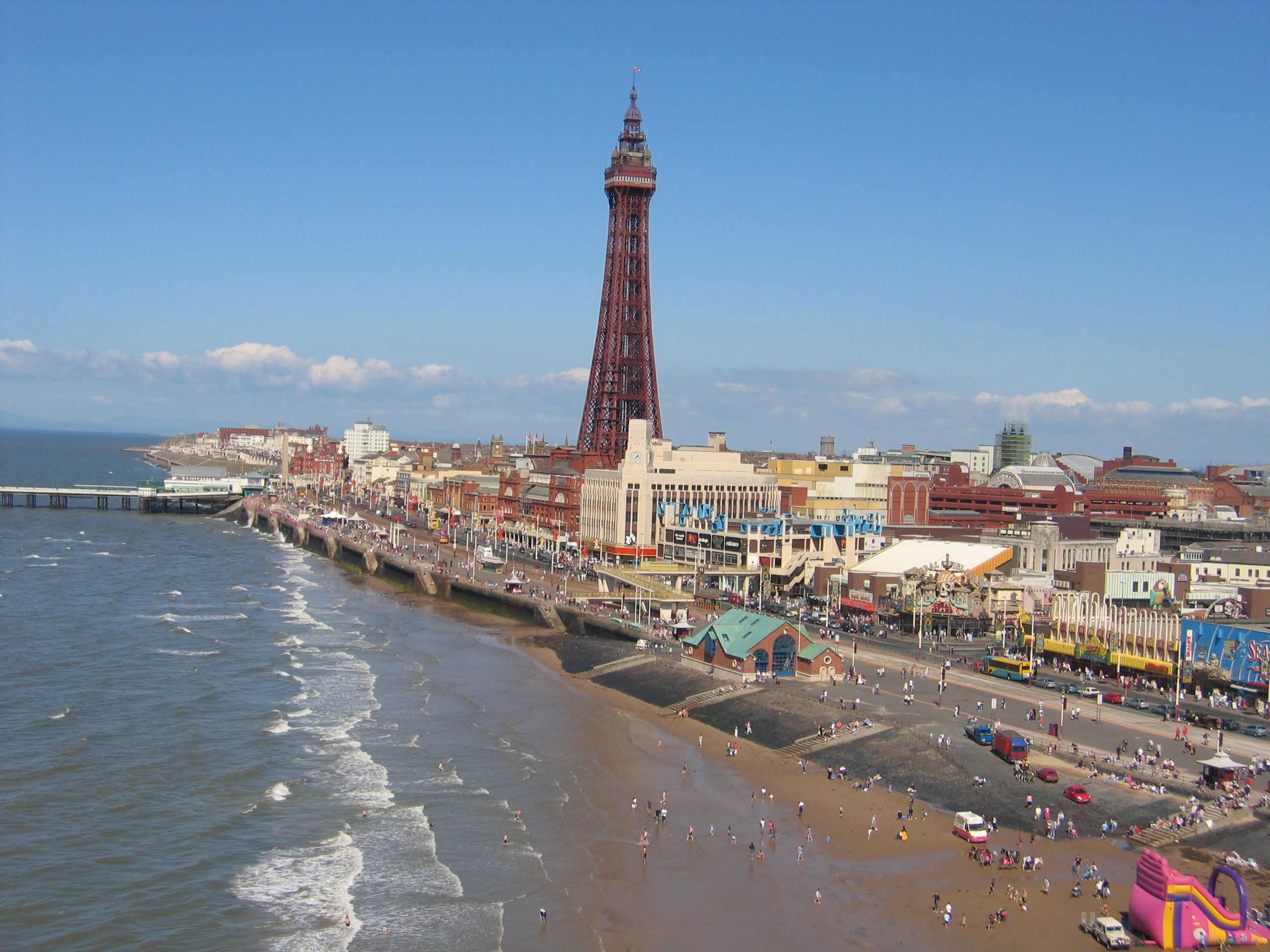
I’m not sure if I can really explain what the mere mention of the sea-side town of Blackpool means to a Brit. It’s loved for it’s ’50′s authenticity, Victorian heritage, piers, tower, amusements, its many famous and successful soccer players and musicians (including Ian Anderson of Jethro Tull, David Ball of Soft Cell, Chris Lowe of Pet Shop Boys, Graham Nash of The Hollies and Crosby, Stills, Nash & Young, Robert Smith of The Cure, Lemmy of Motorhead….)

As Blackpool competes with other tourist destinations, it is turning to digital marketing strategies to connect to people far and wide to spread the word about this jewel in the UK’s crown.

UK digital out of home advertising solutions company, Digital Guys called Monster Media to leverage our LocaModa social media platform. The same approach that attracts millions of people to tweet photos to screens in Vegas, Times Sq and thousands of bars, clubs, stadia in US and beyond, is being used by Blackpool to amplify its appeal.

The juxtaposition of Twitter, Instagram, Facebook etc and Blackpool’s Victorian appeal might seem odd at first, but actually makes perfect sense. Any subject that touches the passions of followers is a good starting point for a marketing strategy.

The campaign doesn’t start until the 28th November but it’s already getting the right kind of attention.

Digital Guys are cleverly and efficiently using multiple digital channels to promote, connect to and extend the Blackpool brand. They are leveraging Monster’s LocaModa platform to aggregate, filter and display tweets and Instagram photos around the hashtag #LoveBPL. They are then amplifying this attention via facebook and google+. They are doing this right by actively working all these channels: monitoring the conversations, responding, retweeting, and promoting their campaign in blogs. And it’s working. Quickly.

Within just 3 days a blog post about their campaign received over 12,000 views and over 400 shares.

Joanna Kay, from DigitalGuys, said: “Blackpool is great and so much more than a summer season resort. But just talking to people in London and elsewhere, too many people think it is all rock and donkeys. We want to raise awareness of everything else that goes on here from the people that live and work here. Blackpool has got the £220m Central Business District development, and all the culture and entertainments to offer.”

As I have reported we have been working with a number of networks and brands on similar approaches. It’s really important to not lose sight that such campaigns are short term tactics. When they are over, the brand and the networks need to continue to engage and have a dialog with their audiences. Having a long term approach, is where this works and impacts brand equity and revenue opportunities (sponsorships, ticket sales etc).

Imagine a not-too-distant future Blackpool with a famous interactive billboard on its North Pier displaying kiss-me-quick Instagram photos and filtered tweets and connecting to multiple social channels and screens to keep the Blackpool brand front of mind.

Share

When the OAAA publishes a document called Mobile and Social Guidelines, a document about how important social media is to the Out-of-Home (OOH) industry, you know that the times they are changing.

That document can be downloaded here and it’s well worth a read if you’re an agency, brand, network or any business needing to leverage out-of-home audiences.

Disclosure: I was involved in drafting these recommendations with a committee of motivated industry leaders. We had the shared agenda of establishing agnostic, cross channel standards that we hope will remove much of the friction for brands and agencies to buy and deploy social and mobile media in our market.

Nicholas Negroponte (he of MediaLab fame) said in his book “Being Digital” that we are moving from a world of atoms to bits. Bits talks to each other. Bits thrive in a world where they can be shared. They are not static like paper and paste.

So it’s only timely and fitting that the OAAA has taken a leadership role in defining how bits need to flow across a rapidly growing percentage of a global market that in 2012 was worth $33.4 billion market (Source PWC).

Appropriately, the OAAA does not push any specific companies or platforms but it does talk about what we all need to do help move the market forward. As the document’s introduction states, these standards will allow media agencies to efficiently and effectively plan campaigns across multiple providers and platforms.

If you need the Cliff NOtes, the main thrust is that while there are many methods of engaging with consumers through social and mobile OOH (something I call SoHO), these campaigns can be categorized into four variants that cover:

one-way (180 degree)
two-way (360 degree)
real-time and
non-real-time programs

It would great to get to the point when an agency RFP specifies a social OOH 360 realtime program and we know that there are say 1,000 screens available for that program or a Social OOH 180 non-real-time program and know that there are 250,000 screens available. OOH/DOOH networks would be able to declare that their screens are compatible with any or all of the four flavors of the standard and digital markets (for that IS the world we are in) will eventually be better able to match OOH buyers and sellers.

Ultimately, mobile and social engagement opportunities enable advertisers to connect with consumers in a more meaningful way and create a dialogue rather than a monologue with those consumers. And that connection is critical to the success of our market.

The document is available to any interested parties NOT JUST OAAA MEMBERS. Another fine example of industry leadership.

Congratulations to Stephen Freitas and his team at OAAA for their stewardship on this standard.

Share

My phone rang the moment news hit the wires that Monster Media had acquired LocaModa. And it hasn’t stopped. Less than one month after that announcement, with my head still buzzing, I thought it would be a good time to open up about the rationale for the deal and the opportunity ahead.

The announcement can be found here but as you might expect, the real news was not really the mechanics behind the purchase, but the strategy.

Monster and LocaModa have been in competitive bids for a few years now - whenever brands wanted a dominant interactive solution, Monster would frequently be their choice. When brands wanted a solution on existing networks, inside a loop, their choice was frequently LocaModa.

Together, Monster + LocaModa can now run campaigns for global clients on any screen, any network and any channel. The agnostic and scalable nature of LocaModa enables this - but that’s not all.

Anyone who knows me or has had the dubious pleasure of listening to me speak about the DOOH space for more than a few minutes will know that I’ve been passionate and outspoken about a vision for what I’ve dubbed “The Web Outside” - a world where all screens are connected and more engaging. That vision was early, but today more brands are asking for what we have patented.

We believe the rising tide of social and mobile will only lift our market if networks can connect to those channels. Put another way, without a scaleable and agnostic solution, the rising tide of mobile and social media will create network islands out of many DOOH networks and erode the value of their proprietary platforms.

Monster has a mouthwatering client base and 70+ super smart people making award-winning media. Together we have a far more scaleable opportunity and we are gearing up to leverage our IP, knowhow and platform to reduce friction for brands and agencies to engage with DOOH.

My role at Monster is EVP Mobile and Social. Expect me to be as outspoken and passionate in that role as I have been at LocaModa.

I’d welcome the chance to chat about this and answer any questions. Feel free to email me at my new email stephen dot randall at monstermedia dot net

Share

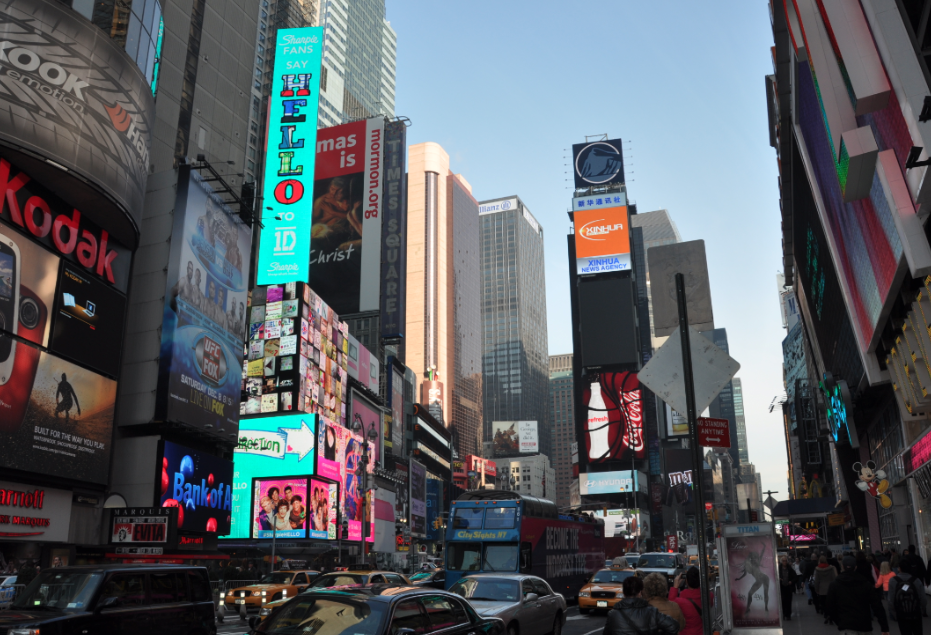
Superlatives are in superdrive as the largest boy band in the world, One Direction (or 1D as their fans call them) arrive in New York today.

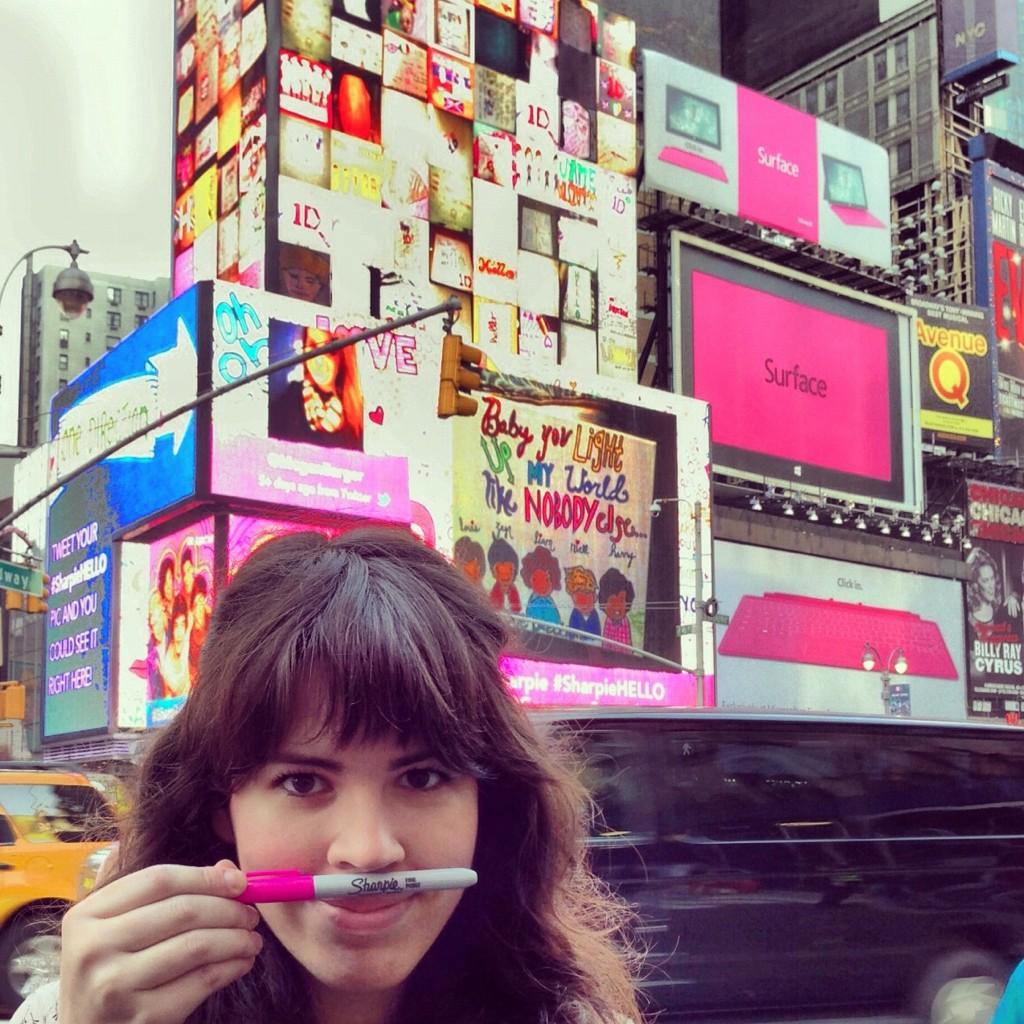
Sharpie, one of the brand sponsors supporting this latest British invasion, are asking One Direction fans to draw, sketch, or scribble anything to do with One Direction and hey presto, they can share the screen with them, and receive a souvenir photo like this one of their moment of fame.

This is yet another great example of a 360 degree Social Out of Home strategy to amplify audience awareness and engagement. Sharpie, by offering fans the chance of being on New York’s largest screen in Times Sq with their heroes are doing everything right. They are offering a fun engagement with a great reward, and a (captured) moment of fame. This is the previously described “3 Fs” strategy (The 3fs = Fame, Fun and Fortune).

If anyone doubts that fans would go to the trouble of drawing pictures (rather than just taking a photo from a smart phone) they’d be wrong - we were deluged by tennie drawings as soon as the campaign went live. We’ve probably got enough pictures to paper all the screens in Times Sq!

Oh, and anyone starving for attention in Times Sq today could of course also submit a photo to the Gap campaign running a few feet away on the Viacom screen.

Share

Gap has been innovating recently with their digital seasonal promotions and this holiday season is no exception. Their multi-channel holiday campaign (their third with LocaModa), “Love Comes In Every Shade” includes a 360 social/OOH program that connects out-of-home media to the most popular social networks for maximum audience amplification.

(Note: Programs with a feedback loop to consumers are often called 360 programs, as opposed to one-way social programs that are called 180.)

Here’s how #GapLove works:

A user tweets a message and photo containing the hashtag #GapLove.

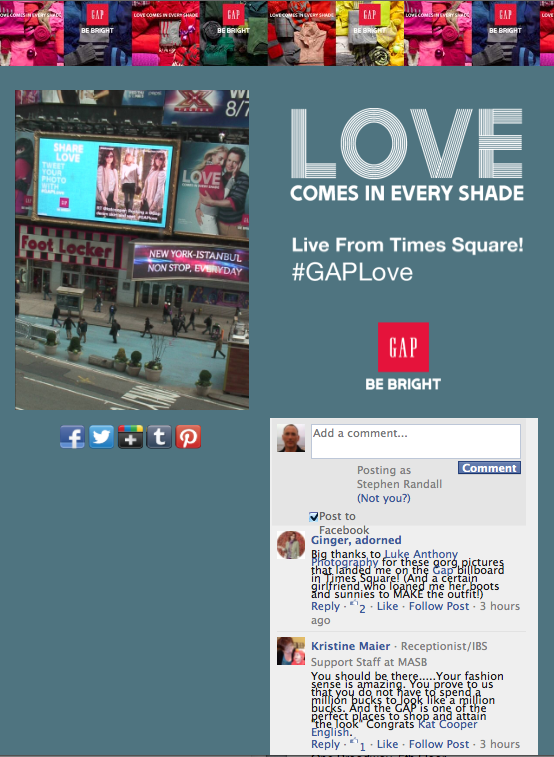
The user’s message is filtered and moderated by LocaModa’s social messaging platform, and, subject to being acceptable, is then posted to the Viacom Times Square screen. (Note: The Viacom Times Sq screen does’t need any additional hardware to run this type of program.)

A camera facing the Viacom screen is synchronized with the media, and takes a souvenir photo of the user’s submission. (again, no additional hardware is required to synchronize the camera - only a web connection.)

A message is tweeted to the user, with a link to their souvenir photo.

The souvenir page not only contains a photo of the users moment of fame, but also share links to Pinterest, Twitter, Facebook, Tumbler and Google+

It’s just too easy to click a link, type a comment, and hey presto the brand is potentially in front of another 300 people the average social graph size.

Data taken from LocaModa’s ten most recent 360 programs shows that over 75% of users share their photo with their social graph, and more than 80% of those users do so via Facebook. By the way, users also happen to spend more than 4.00 minutes on their souvenir page - another good brand touchpoint and conversation point.

Amongst the first people to pick up on the Gap program, send in her photo, then retweet her moment of fame was a member of Wal-Mart’s Global Comms Team.

So for anyone in DOOH/OOH still sitting on the sidelines about enabling social platforms, the message should be getting louder and clearer every day:

Big brands are engaging.

Share