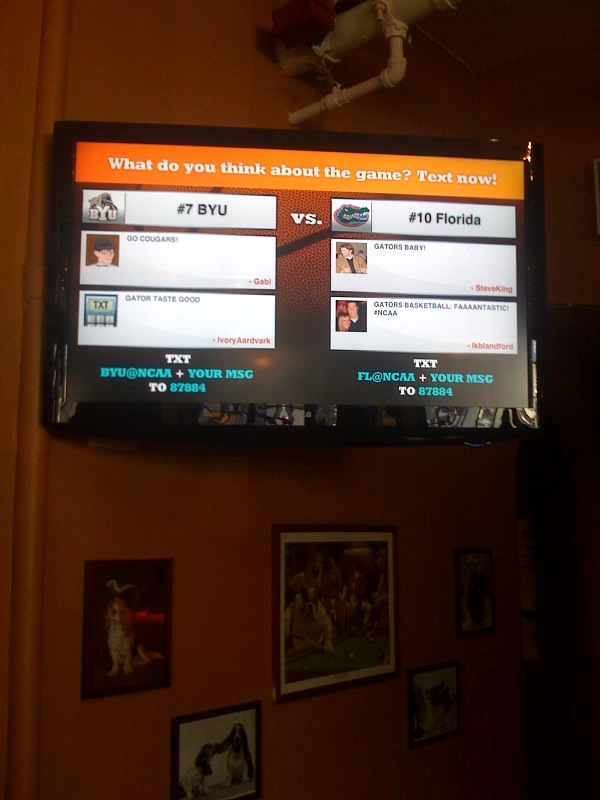
A few weeks ago, Stephen Randall wrote a guest post outlining why location-based services are important for place-based screens. As SXSW approaches, it seems the right time to turn the tables and explore why place-based screens are important for location-based services.
Both Foursquare and Gowalla are shining their shoes and pulling out all the slickest new features in anticipation of SX, and tech blogs are having a comparathon field day. One of the biggest points of distinction has historically* been how each service handles the accuracy and truth of check-ins: the “were you actually there?” issue. (*Note that “historically” is used relatively here; we’re talking on an early adopter time spectrum.)
Sure, Foursquare has been fairly heavily criticized for their lack of lockdown on whether or not users “cheat,” while Gowalla has been getting slammed for being almost too strict, in that GPS unreliability has made check-ins difficult even if a user is actually in the location s/he claims.
Solutions have been tossed around (QR codes, for one), but in the end, the anxiety over the issue has seemed to fizzle somewhat as cool new features have stolen some of the limelight (and thankfully lightened the mood a bit). Foursquare’s growing partner list (disclaimer: LocaModa is on there), ever-expanding badge arsenal, and real-live Foursquare tourney (yep, the actual playground game) at SX are rightfully gaining the attention they deserve, while Gowalla’s move to turn virtual items into real world prizes proves a similar playful take on the “simulacra become fleshy” motif (as one example, virtual tacos can be cashed in for the real deal at taco trucks around the festival).
With the focus back where it should be – on the fun, gaming aspect and not the “gaming the system” aspect, it makes sense to turn to place-based screens to both provide a social display for a location-based service, while also quietly taking much of the steam out of the “were you really here?” issue.
As Stephen discusses in his original post, place-based screens serve as a “user-generated marketing tool for the venue,” allowing patrons to send in tweets and txts that can be displayed alongside check-ins and tips. Venue messaging is showcased in the venue itself, not just on individual handsets, making the interactions from users on-site far more relevant if they’re actually there. Chatting about the Free Beer for the Mayor special if you’re not actually at the bar is just, well, kinda sad.
Sure, this doesn’t solve a technical issue, but it certainly solves a social one.
And isn’t that the point?
___
Edited to add: To toss a bit more fuel into fire, if a more technical solution was desired by a venue, that’s easy icing for a place-based DOOH platform. Locations can display in-venue deals with custom location codes (advertised on screen) that expire after an hour or day, giving an added incentive to the patrons actually there to take advantage of them. Look for an upcoming post on additional technical solutions using place-based networks.